Abiotic Novelty

Dams are ubiquitous and pervasive drivers of abiotic novelty; they create novel habitats for non-native species and can facilitate their spread.
 
Abstract
Human agency often results in increased abiotic novelty, which can facilitate theestablishment and spread of non-native species. I use dams as a case study to explore the causesand consequences of novelty in aquatic ecosystems from an invasive species perspective. Damsinteract with the invasion process in several ways. They fundamentally transform rivers to createmore ideal habitat for non-native species, both up and downstream. They also act as a steppingstone for invasive species to other nearby ecosystems.
 
Abiotic novelty can be a significant facilitator of non-native species. Often, increased abiotic novelty makes habitats more hospitable to non-native species, impacts native species, and in some cases, aids in spread of non-native species. Such abiotic novelty is often associated with human agency and comes in many forms. For example, strong abiotic drivers such as climate change allow for non-native species and native invaders to expand their ranges (Walther et al.2009), while land-use change can facilitate the invasion process via edge effects, reduced predation, or niche construction. The establishment of non-native species in freshwater aquatic systems altered by dams and canals is a particularly pervasive issue that illustrates both the causes and consequences of abiotic novelty following human agency.
 
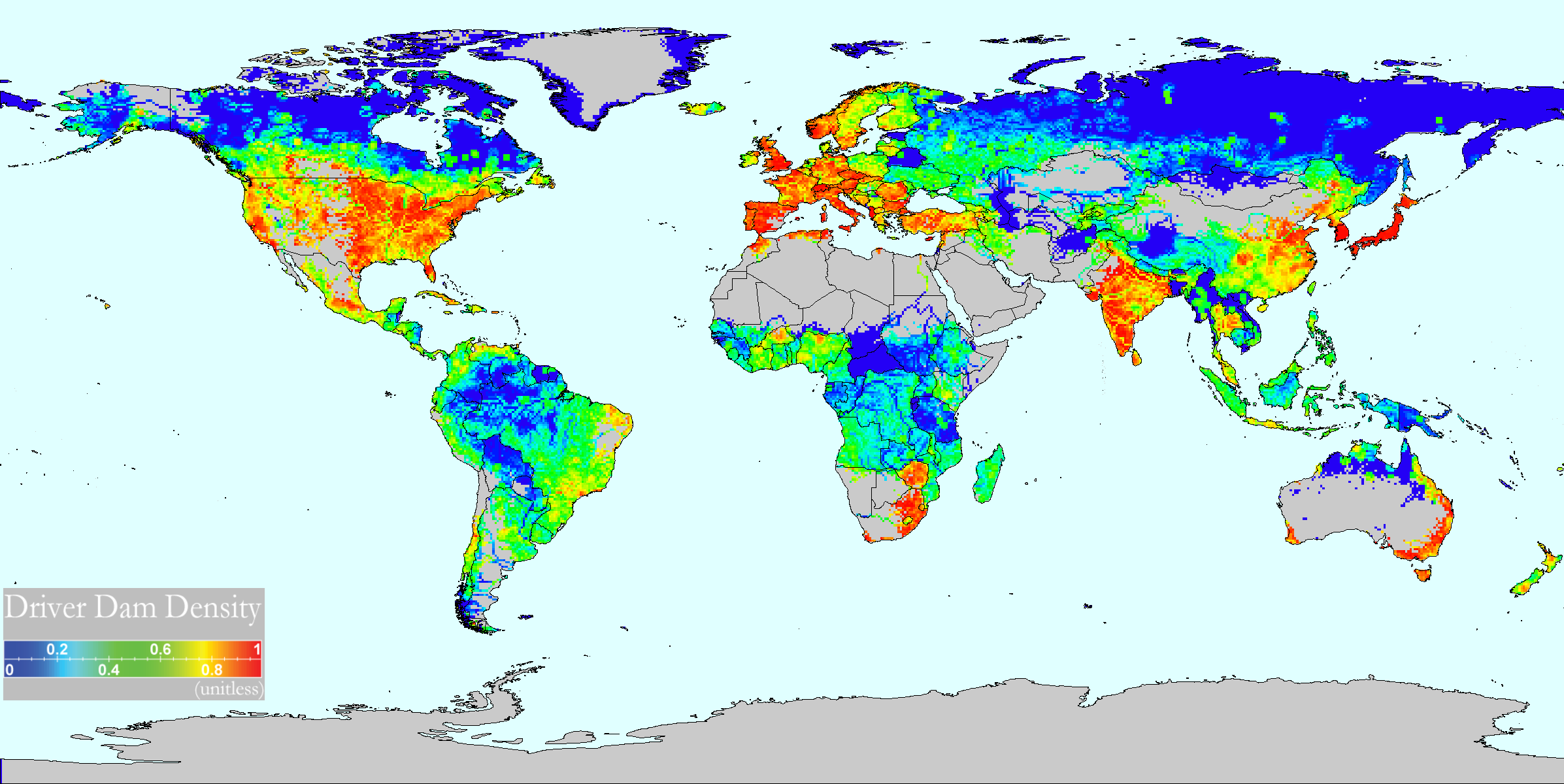
Dams are ubiquitous on human dominated landscapes (Vörösmarty et al. 2010). They fundamentally transform upstream and downstream habitats, often to the detriment of native species and the benefit of non-native species. Primarily, dams and canals facilitate non-nativespecies in three ways. They create new habitats that are easier to exploit by non-native species.Dams also facilitate invasion in downstream habitats by altering the disturbance regimeassociated with high flow events. Additionally, dams and canals can facilitate the spread of non-natives. All in all, dams represent a systemic driver of abiotic novelty that facilitates non-native species.

Global relative dam density map showing how prevalent dams are. Vörösmarty et al. 2010. Supplemental material.


The new habitats created by dams and canals are easily invaded by species that are well adapted to lakes or lowland rivers with low flow rates. The reservoir created can result in novel mixtures of native and non-native species because these systems have characteristics of rivers and lakes  natives are often adapted to rivers and non-natives are often adapted to lakes (Vondracek et al. 1989). Some of the more common non-native fish species that thrive in reservoirs include largemouth bass (Micropterus salmoides), bluegill (Lepomis macrochirus),channel catfish (Ictalurus punctatus), threadfin shad (Dorosoma petense) and common carp (Cyprinus carpio, Rahel 2002). Researchers in California documented strong associations between many of the aforementioned species and aquatic systems modified by dams and canals (Marchetti et al. 2004). In some cases, these species could not persist or would be reduced in population size if it were not for the novel ecosystems created by dams and canals (Kanehl etal. 1997). Many of the above examples are from North America, but the same generalizations about non-natives being facilitated by habitats created by dams can be made about European (Clavero et al. 2013) and South American reservoirs (Daga et al. 2015).
 
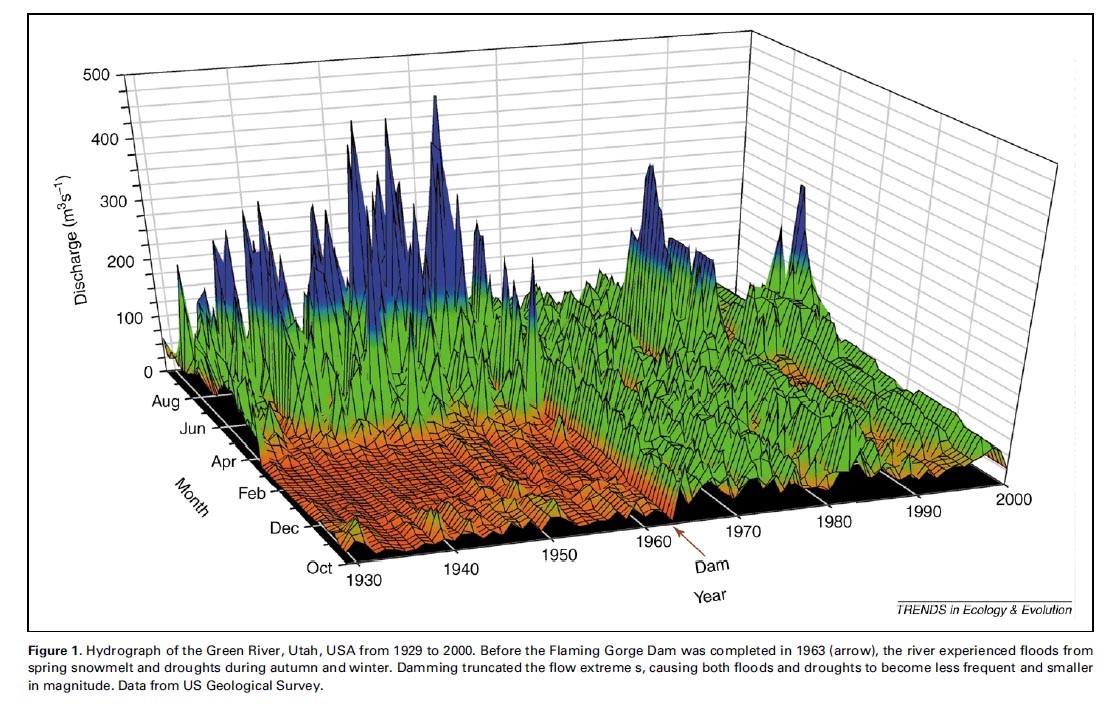
Furthermore, dams create abiotic novelty by effectively altering the disturbance regime of rivers by attenuating extreme flow events (Bunn & Arthington 2002). This has the dual impact of making conditions ideal for non-natives and impacting native species that are adapted to such regimes. These extreme flow events are integral to maintaining native species communities in rivers and floodplains. This is the case because rivers are environmentally harsh, and for species to persist, they need to be adapted to extreme hydrologic events. For example, the persistence of non-native fish communities in regulated rivers seems to be limited by extreme flow events (Marchetti & Moyle 2001).These extreme events also interact with floodplains and riparian habitats. This makes these events essential to maintaining native riparian plant species dominance. The loss of disturbance events following dam construction has facilitated the establishment of tamarisk (Tamarix spp.) in the Grand Canyon (Stromberg et al. 2007) and Phylacanascens in Australian rivers (Taylor & Ganf 2005). By changing the intensity and duration of extreme hydrologic events, dams are facilitating non-native species existence in downstream habitats.
 
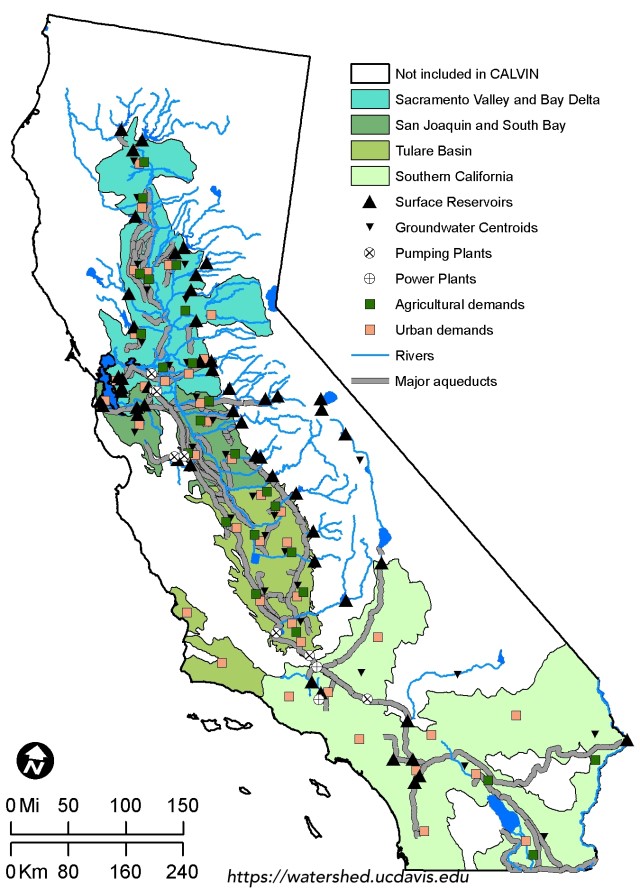
Dams and canals can play a key role in facilitating the spread of non-native species either by acting as a source population or aiding there spread. Invaded reservoirs can act as invasion hubs on the landscape when people unintentionally move organisms to uninvaded systems. For instance, research done in Wisconsin suggests that reservoirs can act as a landscape driver of dispersal for a number of non-native species, especially to natural lakes (Johnson et al. 2008). In other words, regional abiotic novelty can impact local systems, even if they are relatively undisturbed. Reservoirs can also disperse organisms to downstream habitats, especially passive dispersers such as zooplankton and zebra mussels (Driessenia polymorpha, Havel et al. 2005).Exacerbating these trends, canals are often associated with dams, which hydrologically connect previously isolated systems. In some cases, this has transported non-native species to other basins, again, especially those with easily dispersed life histories (i.e. larval stage of fish, etc).For example, striped bass are widespread throughout California’s water infrastructure, but the population was established in the San Francisco-San Joaquin bay estuary in the late 1800’s and has since moved southward using the state’s water conveyance infrastructure (Moyle 2002). Another more extreme case of the consequences of increased hydrologic connectivity are the non-native species in the Laurentian Great Lakes. By some estimates, there are over 180 non-native species in the Great Lakes, many transported via man-made canals and locks or associated boat traffic (Ricciardi 2006).
 

Map of California’s water infrastructure highlights not only the prevalence of dams but also how hydrologically connected everything has become. https://californiawaterblog.com/2012/02/09/insights-for-california-water-policy-from-computer-modeling/


In conclusion, dams, as a special case of a pervasive driver of abiotic novelty, facilitate the establishment and spread of non-native species. The question we are left with is what can we do with these heavily altered systems? Can they be restored? There are already extensive and optimistic efforts to restore rivers and their biota by removing dams (O’Hanley 2011).

For example, several dams have been removed from the Elwha River watershed in Washington with promising results (East et al. 2015). The high flow disturbance regime has been restored,although the response of non-native species in the watershed to restoration is unknown. In someinstances, it seems as if these highly novel systems are restorable, but only when we have the social capital. The next question is how do we build social capital to allow us to tackle larger problems in conservation?

 
~by K. Martin Perales
 
 
Bunn, S.E., Arthington, A.H., 2002. Basic Principles and Ecological Consequences of AlteredFlow Regimes for Aquatic Biodiversity. Environmental Management 30: 492507.Clavero, M., Hermoso, V., Aparicio, E., Godinho, F.N., 2013. Biodiversity in heavily modifiedwaterbodies: native and introduced fish in Iberian reservoirs. Freshwater Biology 58:11901201.
 
Daga, V.S., Skóra, F., Padial, A.A., Abilhoa, V., Gubiani, É.A., Vitule, J.R.S., 2015. Homogenization dynamics of the fish assemblages in Neotropical reservoirs: comparingthe roles of introduced species and their vectors. Hydrobiologia 746: 327347.
 
East, A.E., Pess, G.R., Bountry, J.A., Magirl, C.S., Ritchie, A.C., Logan, J.B., Randle, T.J.,Mastin, M.C., Minear, J.T., Duda, J.J., Liermann, M.C., McHenry, M.L., Beechie, T.J.,Shafroth, P.B., 2015. Large-scale dam removal on the Elwha River, Washington, USA:River channel and floodplain geomorphic change. Geomorphology 228: 765786.
 
Havel, J.E., Lee, C.E., Vander Zanden, J.M., 2005. Do reservoirs facilitate invasions into landscapes? BioScience 55: 518525.
 
Johnson, P.T., Olden, J.D., Vander Zanden, M.J., 2008. Dam invaders: impoundments facilitatebiological invasions into freshwaters. Frontiers in Ecology and the Environment 6: 357363.
 
Kanehl, P.D., Lyons, J., Nelson, J.E., 1997. Changes in the Habitat and Fish Community of theMilwaukee River, Wisconsin, Following Removal of the Woolen Mills Dam. North American Journal of Fisheries Management 17: 387400.
 
Marchetti, M.P., Moyle, P.B., 2001. Effects of Flow Regime on Fish Assemblages in a Regulated California Stream. Ecological Applications 11: 530539. 
 
Marchetti, M.P., Light, T., Moyle, P.B., Viers, J.H., 2004. Fish invasions in California watersheds: testing hypotheses using landscape patterns. Ecological Applications 14:15071525.
 
Moyle PB 2002. Inland Fishes of California. Berkeley: University of California Press.O’Hanley, J.R., 2011. Open rivers: Barrier removal planning and the restoration of free-flowing rivers. Journal of Environmental Management 92: 31123120.
 
Rahel, F.J., 2002. Homogenization of Freshwater Faunas. Annual Review of Ecology and Systematics 33: 291315.
 
Ricciardi, A., 2006. Patterns of invasion in the Laurentian Great Lakes in relation to changes in vector activity. Diversity and Distributions 12: 425433.
 
Stromberg JC, S J Lite, R Marler, C Paradzick, PB Shafroth, D Shorrock, JM White, & MSWhite.  2007. Altered stream flow regimes and invasive plant species: the Tamarix case. Global Ecology and Biogeography 16: 381393.
 
Taylor, B. & Ganf, G.G. (2005) Comparative ecology of two co-occurring floodplain plants: thenative Sporobolus mitchellii and the exotic Phyla canescens. Marine and Freshwater Research, 56: 431440.
 
Vondracek, B., Baltz, D.M., Brown, L.R., Moyle, P.B., 1989. Spatial, seasonal and dieldistribution of fishes in a California reservoir dominated by native fishes. Fisheries
Research 7: 3153.
 
Vörösmarty, C.J., McIntyre, P.B., Gessner, M.O., Dudgeon, D., Prusevich, A., Green, P.,Glidden, S., Bunn, S.E., Sullivan, C.A., Liermann, C.R., Davies, P.M., 2010.
Globalthreats to human water security and river biodiversity. Nature 467: 555561.Walther, G.-R., Roques, A., Hulme, P.E., Sykes, M.T., Pyšek, P., Kühn, I., Zobel, M., Bacher, S., Botta-Dukát, Z., Bugmann, H., others, 2009. Alien species in a warmer world: risks and opportunities. Trends in ecology & evolution 24: 686693.